Ask five people what it costs to open a medical store and you will get five answers, from "₹3 lakh is enough" to "don't start under ₹25 lakh". Both can be true. The answer depends on the size of the shop, the city and how much stock you start with.
So instead of one number, here is a budget you can copy and change. It is for a small neighbourhood store of about 150–200 sq ft in a tier-2 town, with one registered pharmacist. Every line is an example; put your own quotes next to it.
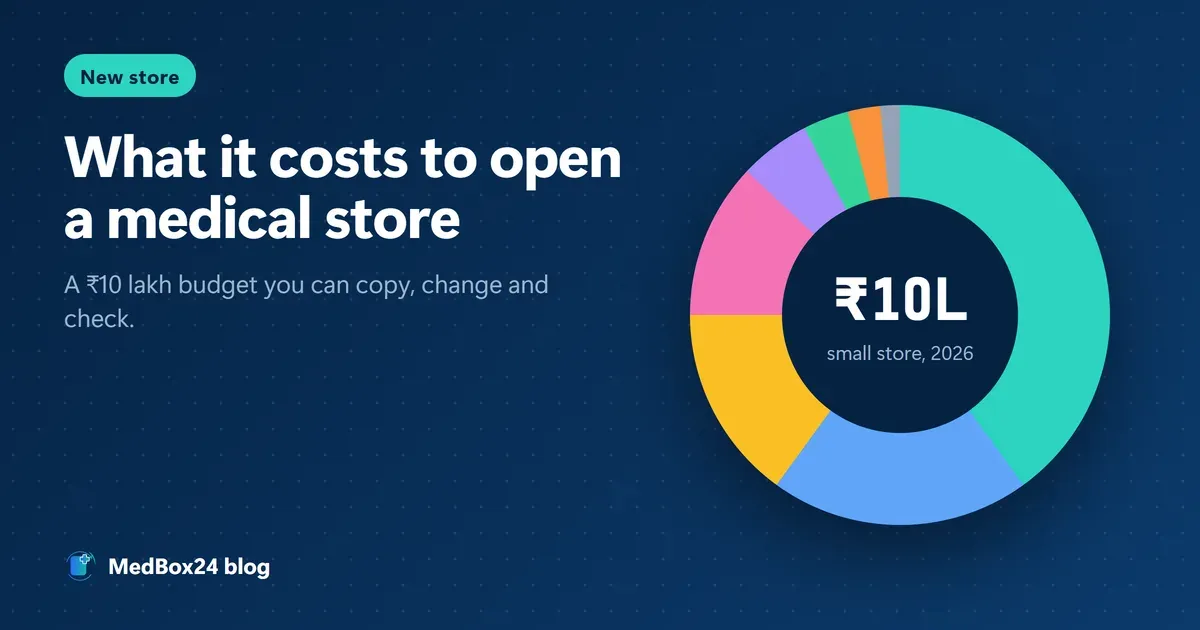
The ₹10 lakh example
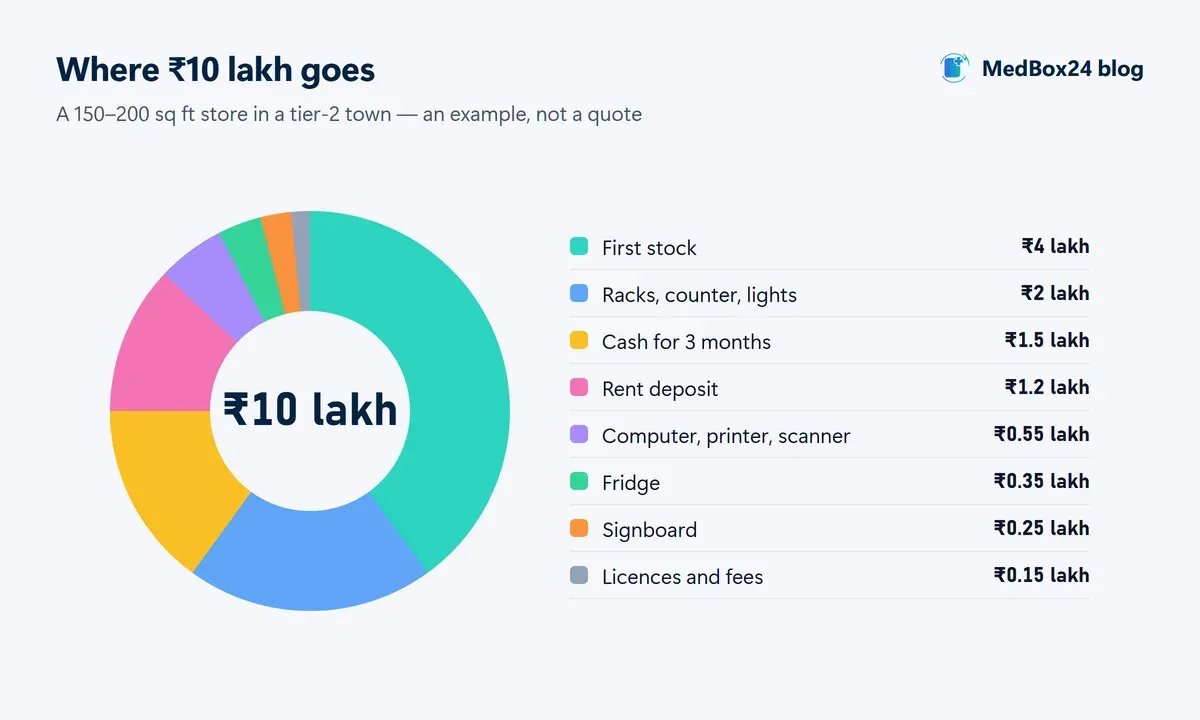
What | Example amount | Can it be less? |
|---|---|---|
Rent deposit (6 months at ₹20,000) | ₹1,20,000 | Yes — some owners take 3 months |
Racks, counter, glass, lights | ₹2,00,000 | Yes — second-hand racks cost half |
Fridge with a thermometer | ₹35,000 | Not much — insulin and vaccines need it |
Computer, bill printer, barcode scanner, UPS | ₹55,000 | A phone and a small printer can start you off |
Signboard and display | ₹25,000 | Yes |
Drug licence, GST, shop registration, small fees | ₹15,000 | Depends on the state |
First stock | ₹4,00,000 | Partly on credit, see below |
Cash for three months of running costs | ₹1,50,000 | Do not cut this one |
Total | ₹10,00,000 |
The first stock is the biggest line — and the most flexible
Most of your money sits on the shelves. A small store needs somewhere between 1,500 and 3,000 different products to answer most prescriptions in its area, and ₹3–5 lakh of stock is common at the start.
Two things make this easier than it looks:
Distributors give credit. 15 to 30 days is normal once they know you. If half your first stock is on credit, you need about ₹2 lakh in cash for it, not ₹4 lakh.
You do not need everything on day one. Stock what the doctors near you actually write. Ask the nearest two or three clinics which brands they prescribe most, and buy those first. Everything else can come on a next-day order.
What you must not do is fill the shelves with slow products because a scheme looked good. That money comes back only when the strip sells — or never, if it expires first. We wrote about this in dead stock in a medical store.
Licences and registrations
You will need a retail drug licence from your state's drug control department (Forms 20 and 21 for most allopathic medicines), GST registration, and usually a shop and establishment registration from the local body. The government fees for the drug licence are a few thousand rupees; check the exact amount on your state's drug control website, because it differs from state to state and some sites selling "drug licence services" quote numbers that are out of date.
Since 2017, a retail drug licence does not have to be renewed every five years; it stays valid as long as you pay the retention fee on time. Our guide on getting a drug licence for a medical store has the documents and the steps.
The line people skip: three months of running costs
A new store does not sell ₹20,000 a day in its first week. It takes a few months for the neighbourhood to start coming to you instead of the store they already know. During that time rent, salary and electricity still have to be paid.
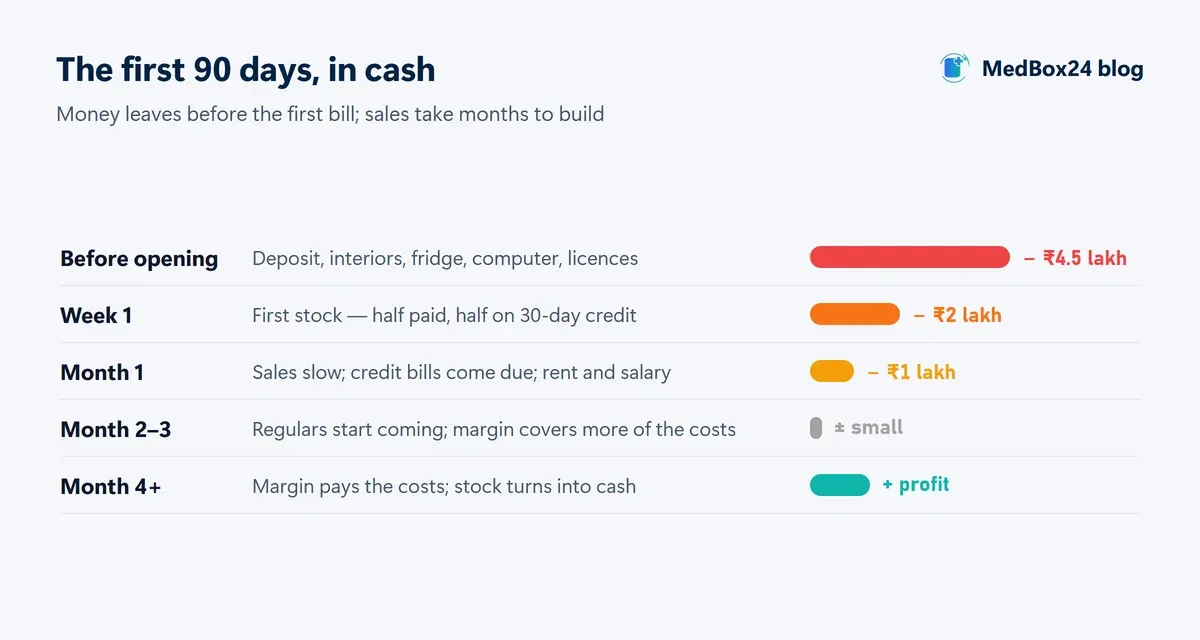
Keep three months of fixed costs in the bank before you open — for our example, rent ₹20,000 + pharmacist ₹20,000 + electricity and small costs ₹10,000 = ₹50,000 a month, so ₹1,50,000. Stores that close in the first year rarely close because the idea was bad. They close because the cash ran out in month four.
Where you can save, and where you should not
Save on: second-hand racks in good condition, a smaller signboard, a simple computer, and starting with fewer products.
Do not save on:
The fridge. Insulin, some vaccines and eye drops must be kept at 2–8°C. A cheap fridge that freezes at the back can ruin a whole box of insulin. See storing insulin and vaccines at the counter.
The pharmacist. The licence needs a registered pharmacist on the premises. An arrangement where a pharmacist "lends" their certificate and never comes is exactly what a drug inspector looks for.
Proper billing from day one. A bill book is cheap, but working out GST, batch and expiry by hand on every bill costs you time and mistakes every single day.
Your own numbers
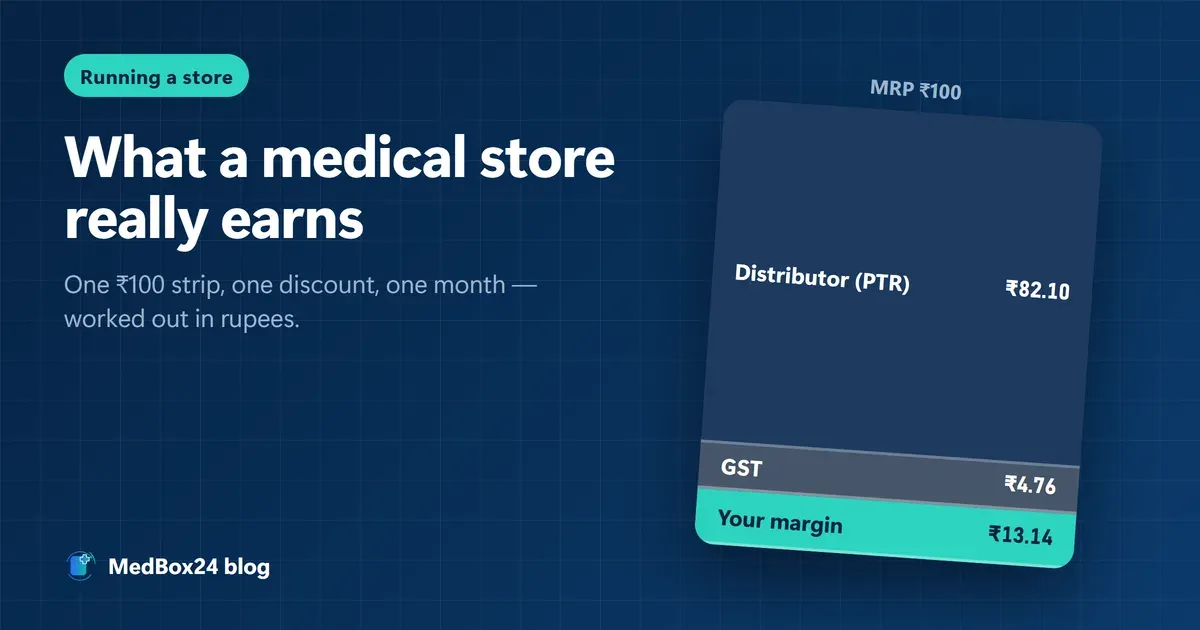
Take the table above, put your rent, your quotes and your stock list next to it, and add a 10% "things I forgot" line. If the total is more than you have, start smaller: fewer products, a smaller shop, the same discipline. Then look at how much a medical store really earns to see how long the money takes to come back.
Run your medical store on MedBox24
Billing, stock, expiry, GST and payroll — on phone and computer. Free trial, no card.
Start free trial