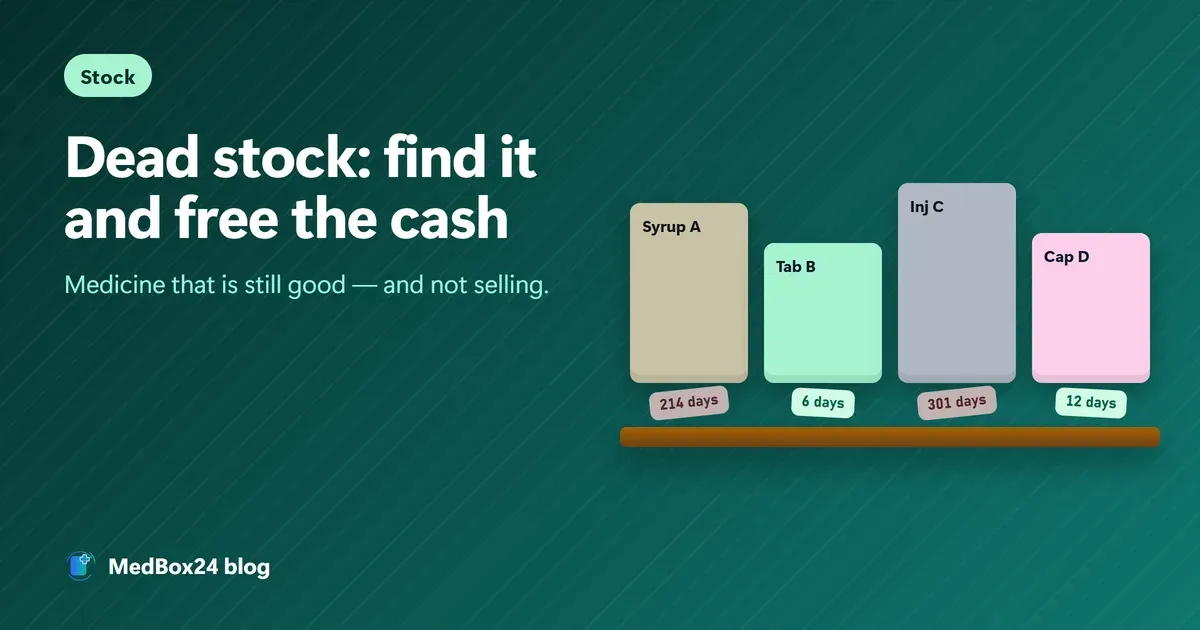
Walk along your shelves and pick up any box from the top row, right at the back. Ask yourself when you last sold one. If you have to think about it, that box is probably dead stock.
Dead stock is not the same as expired stock. It is medicine that is still good, still on the shelf — and not selling. It does not show up as a loss on any report. It just sits there holding your money, until one day it expires and becomes a loss all at once.
What counts as dead
A simple rule that works for most stores:
Slow: not sold in the last 90 days.
Dead: not sold in the last 180 days.
Some products are slow by nature — a rare injection, a specialist's prescription — and that is fine if you keep one or two. The problem is when you have ten.
How much money is sitting there
Take a store with ₹4 lakh of stock at purchase price. In most stores that have never cleaned up, somewhere between 10% and 20% of the stock has not sold in six months. At 15%, that is ₹60,000 sitting still.
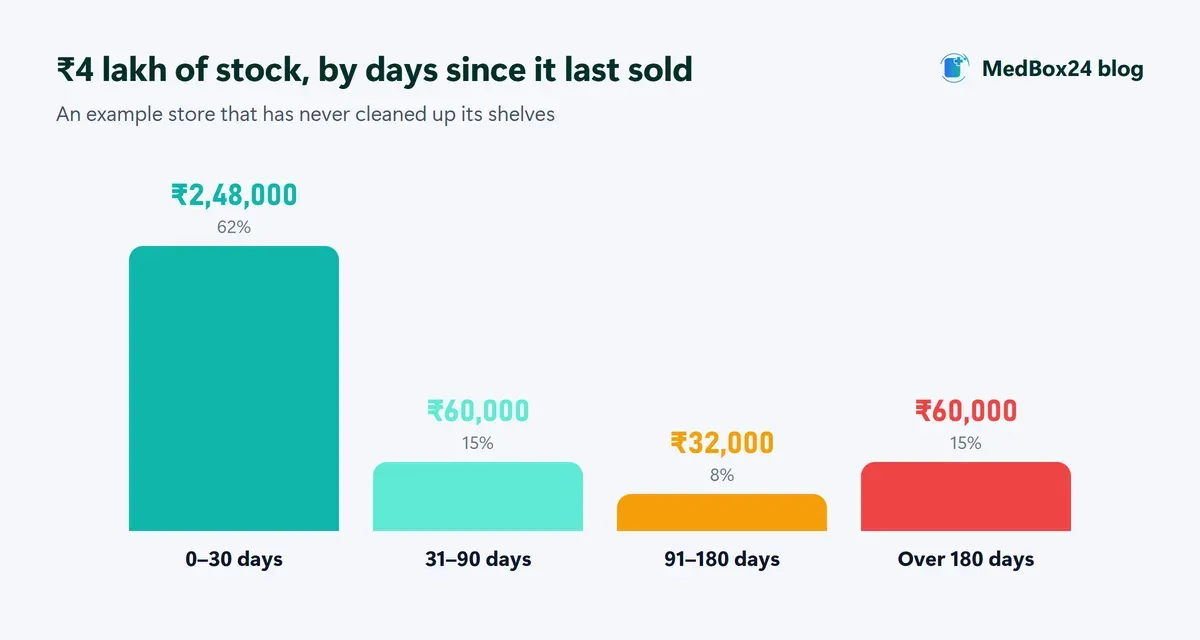
₹60,000 is two months of a pharmacist's salary. It is also a credit line you are paying for: if that money came from a loan or from distributor credit you could not clear early, it costs you every month it sits there.
Finding it
You need one list: every product with stock, and the date it last sold. Sort it with the oldest sale at the top, and show the stock value next to each line.
If your billing software keeps batch-wise stock, it can make this list in seconds. If you still keep stock in a register, do it one rack at a time — one rack a week, and in two months you have looked at the whole store.
Mark each dead line with one of four decisions.
Four things you can do with it
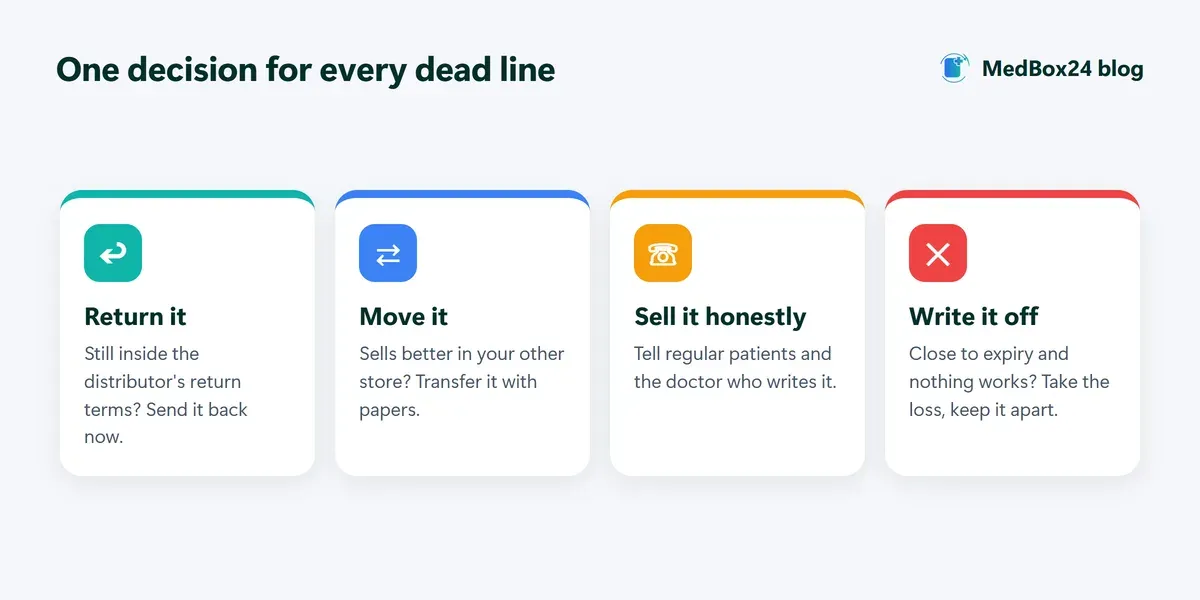
Return it. If the distributor's return terms still allow it, send it back now, while there is time left on the batch. A return at a small deduction is better than an expiry at full loss.
Move it. If you own more than one store, the product may sell in the other one. Move it between your own stores with proper stock transfer papers.
Sell it honestly. Let regular customers who take that medicine know you have it. Tell the nearby doctor who used to write it. Never push a medicine on a patient who does not need it — that is the line you do not cross.
Write it off. If none of these work and the expiry is close, accept the loss, write it off properly in your books, and keep it apart for return or disposal. Holding it "just in case" only makes the same decision harder later.
A word of caution on option 2: selling stock to another chemist's store is a wholesale sale, which needs a wholesale licence. Moving stock between stores you own is different. If you are unsure, ask your drug inspector's office before you do it.
Why it happens — and how to stop it
Almost all dead stock comes from four habits:
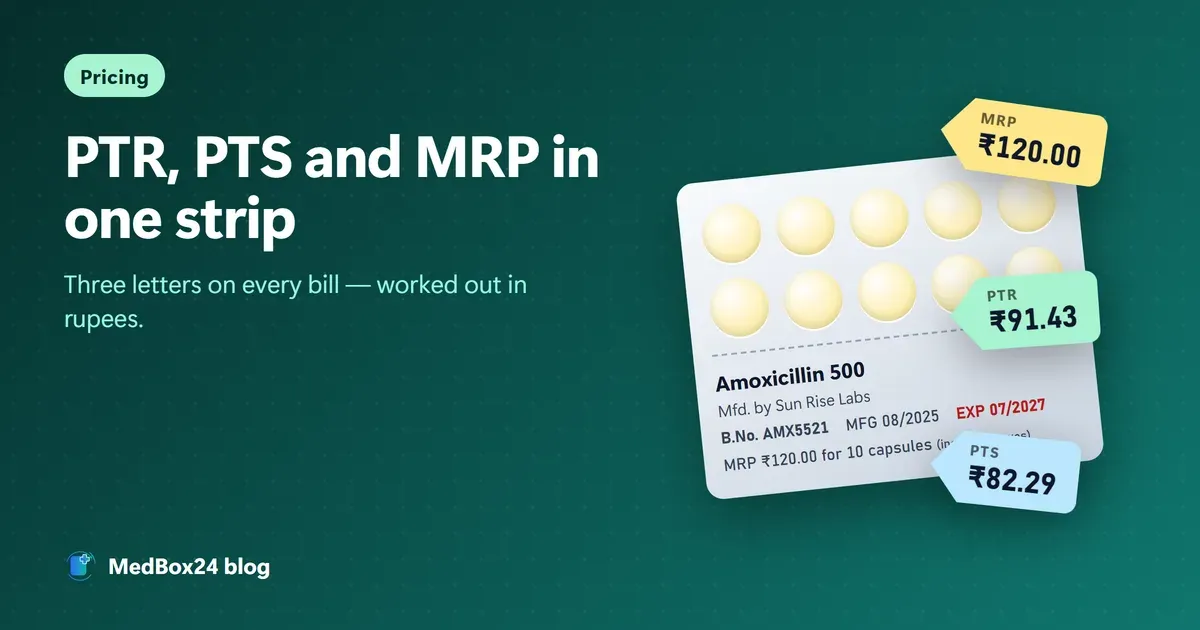
Schemes on slow products. "10+2 this month only" on something you sell twice a month. Read PTR, PTS and MRP explained for what a scheme is really worth.
New launches from medical reps. A rep convinces you to take a box of a new brand. The doctor writes it for a month, then goes back to the old one.
Buying by habit. Re-ordering what you ordered last month, without checking what actually sold.
One doctor leaving. The specialist moves, and their brands stop selling overnight.
The fix is a short rule for purchase: buy what sold, in the quantity it sold. Look at the last 30 days of sales for each product before you re-order, not at the empty space on the shelf. For new brands, take the smallest pack the distributor allows, and only re-order after it actually sells.
Make it a monthly habit
Once a month, on the same day, pull the dead-stock list and spend half an hour on it. The first time is painful. By the third month the list is short, and the money that used to sit on the back shelf is in your bank — or on the shelf as stock that actually sells.
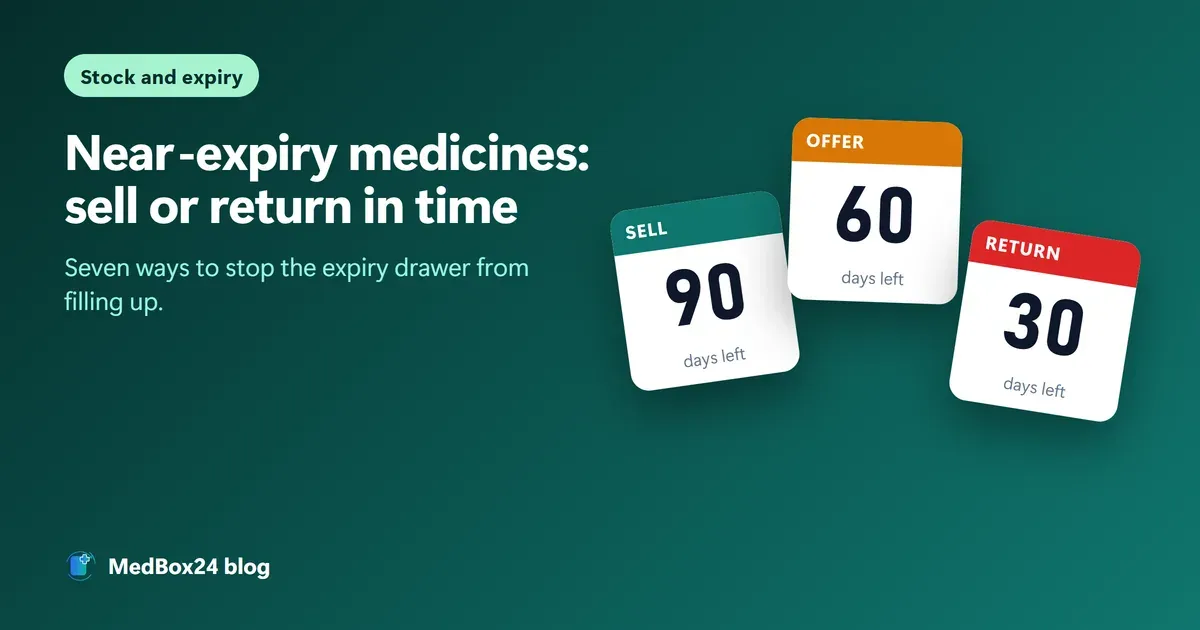
Dead stock and expiry are two ends of the same problem. Once this list is under control, selling near-expiry medicines on time becomes much easier too.
Run your medical store on MedBox24
Billing, stock, expiry, GST and payroll — on phone and computer. Free trial, no card.
Start free trial