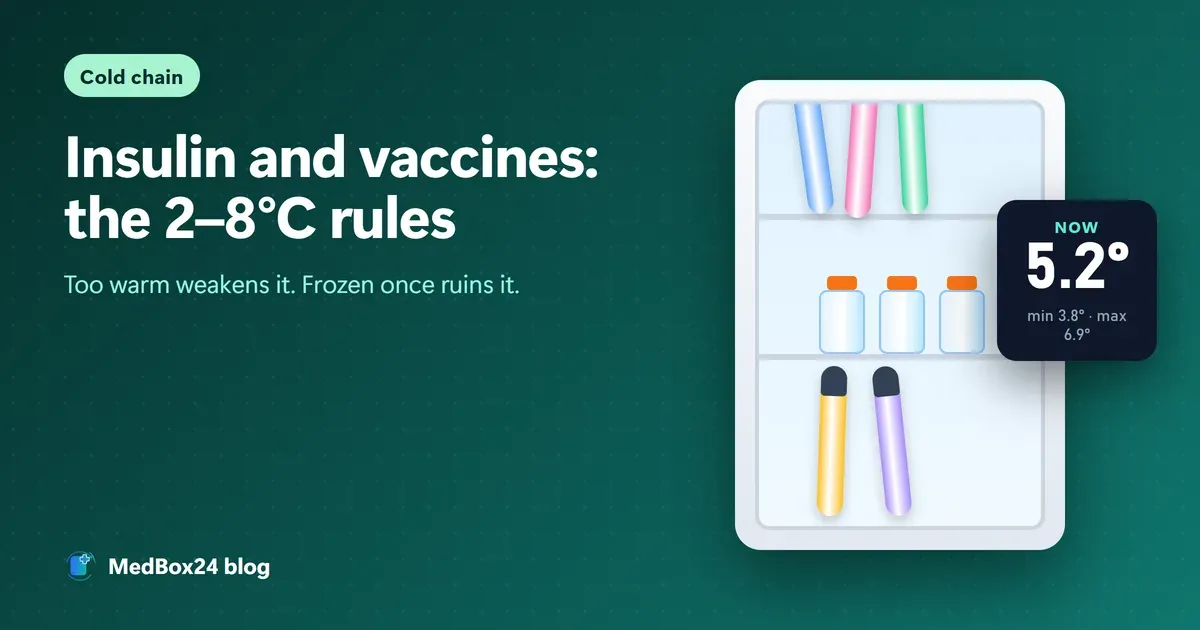
A box of insulin can cost more than everything else on one rack. It also has the shortest margin for error of anything you sell. Too warm and it slowly loses strength; frozen even once and it is ruined, even if it looks exactly the same.
The patient cannot tell. You cannot tell by looking. The only protection is how you store it — so here are the rules that matter, in the order things go wrong.
The one number: 2 to 8°C
Unopened insulin, most vaccines, and a handful of other products (some eye drops, some injections, a few probiotics) must be kept between 2°C and 8°C. The pack says so: look for "Store between 2°C and 8°C. Do not freeze."
"Do not freeze" matters as much as the 8°C. Many stores lose insulin not to heat but to a fridge set too cold.
Where it goes inside the fridge
A normal fridge is not the same temperature everywhere.
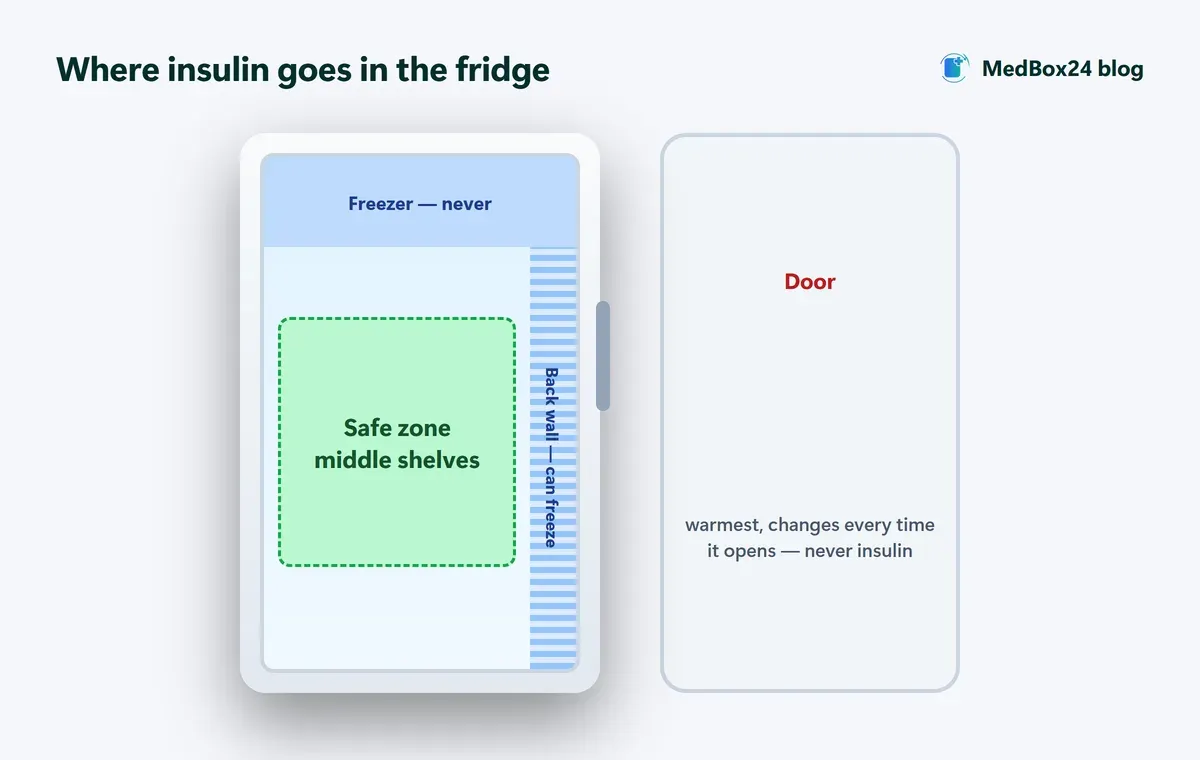
The door is the warmest place and changes every time you open it. Never keep insulin there.
The back wall, where the cooling plate is, can drop below 0°C. Insulin touching it can freeze.
The freezer and the shelf just below it can be too cold.
The middle shelves, away from the back wall, are the safe zone. Keep insulin and vaccines here, in their boxes, with some space around them for air.
A pharmaceutical fridge holds the temperature more evenly and is worth it if you sell a lot of cold-chain products. A good domestic fridge works for a small store if you use it this way and keep only medicines in it — no water bottles, no lunch.
Measure it, write it down
Put a thermometer that shows the minimum and maximum temperature on the middle shelf. Twice a day — at opening and at closing — write down the current, minimum and maximum, then reset it.
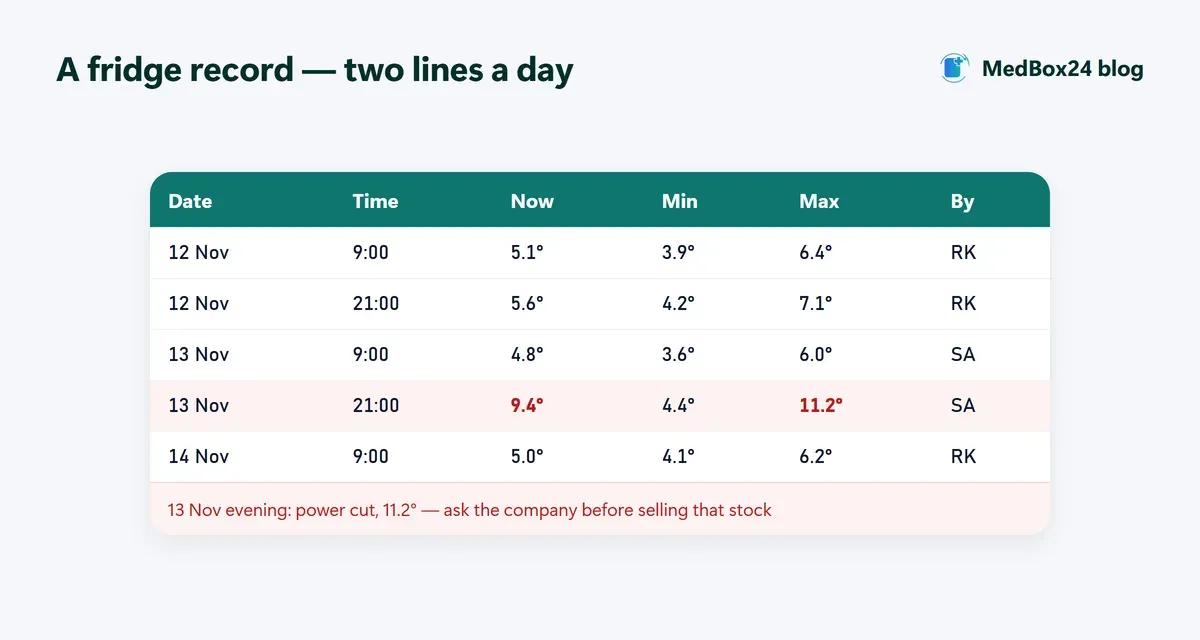
Why bother? Because the minimum tells you if it froze at night, and the maximum tells you if it got warm during a power cut. Without a record, you cannot know whether last week's insulin is still good. With it, you can show an inspector — or a worried patient — that it is.
Power cuts
Keep the door shut. A closed fridge with a full load stays cold for a few hours.
Put the fridge on the inverter if your inverter can take it.
After a long cut, check the maximum reading. If it went above 8°C for long, ask the distributor or the company before you sell that stock.
Receiving stock
Cold-chain products should arrive in an insulated box with ice packs. When the delivery comes:
Open the cold box first, before anything else in the delivery.
Feel the packs — cool, not warm, not frozen solid against the insulin.
Put them in the fridge straight away.
If the box arrived warm, write that on the delivery note and call the distributor before you accept it.
At the counter: what to tell the patient
Most of what happens to insulin happens after it leaves your store. Thirty seconds at the counter helps:
Unopened insulin goes in their fridge, not the freezer, not the door.
The pen or vial in use can usually stay at room temperature for a limited time — often around four weeks — but the limit differs by brand, so tell them to check the leaflet.
Never leave it in a hot car, on a sunny windowsill or next to the stove.
Carry it in a cool pouch when travelling.
Give it to them in a small cool bag or with a cold pack in summer. It costs a few rupees and patients remember it.
The cost of getting it wrong
One frozen box of insulin pens can wipe out a whole day's margin. A fridge in the wrong place — next to the window, against the inverter — can do that quietly every summer. If you are planning a new store, the layout post shows where the fridge should go. And if a drug inspector visits, the fridge and its record are on the checklist for exactly this reason.
Run your medical store on MedBox24
Billing, stock, expiry, GST and payroll — on phone and computer. Free trial, no card.
Start free trial