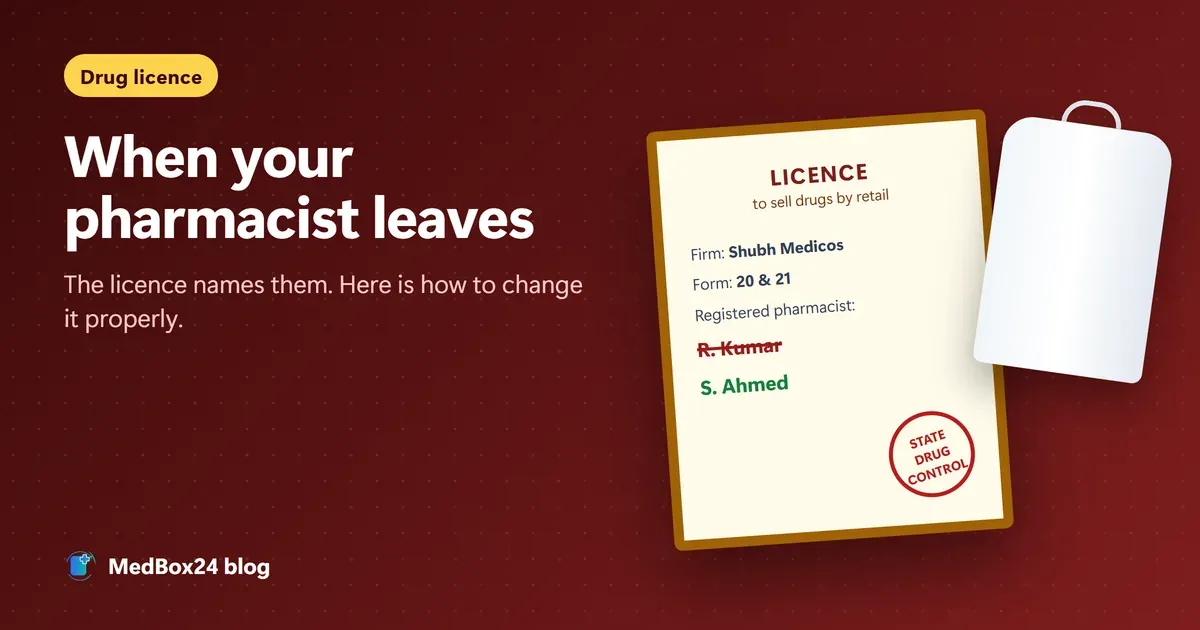
Your retail drug licence is not only in the store's name. It also names the registered pharmacist who supervises the sale of medicines. When that person leaves — a new job, marriage, moving cities, retirement — the licence does not leave with them, but it does need attention.
This is one of the most common reasons stores get into trouble at an inspection: the pharmacist on paper left long ago, and nobody told the licensing office. Here is how to handle it properly.
Why it matters
Medicines, especially prescription medicines, must be sold under the supervision of a registered pharmacist. The licence records who that is. If the named pharmacist is no longer working at your store:
your store is, on paper, selling without the supervision the licence was granted on,
an inspector who asks "Where is the pharmacist?" will ask for the person named on the licence,
the old pharmacist's registration is still linked to your store, which is a problem for them too, if they join another store.
Step by step
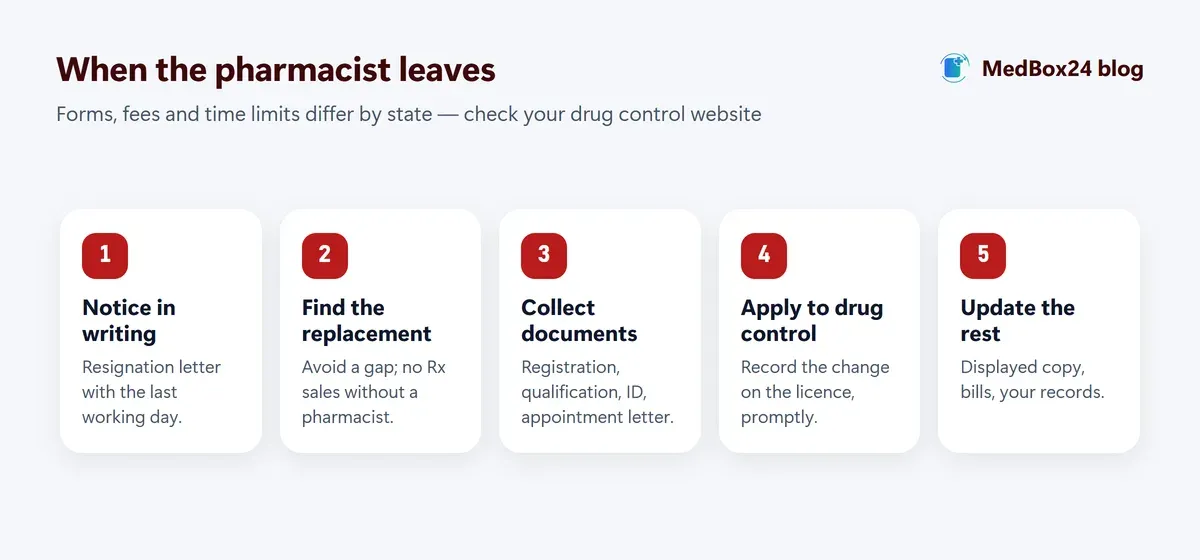
Get the notice in writing. A resignation letter with the last working date. This is your proof of when the change happened.
Find the replacement before the last day if you can. A gap with no pharmacist is the risky period. If a gap is unavoidable, do not sell prescription medicines without a pharmacist present.
Collect the new pharmacist's documents: registration certificate with the State Pharmacy Council (valid and renewed), qualification certificate, identity proof, and an appointment letter or consent letter from them.
Apply to your State Drug Control department to record the change of registered pharmacist on the licence. Most states now take this online, with the documents above and a fee. Do it promptly — the exact time limit and form depend on your state, so check your state's drug control website.
Update everything else: the licence copy displayed in the store, the pharmacist name on your bills or letterhead if you print it, and your own records.
Keep the acknowledgement of your application in the inspection folder. If an inspector comes before the updated licence arrives, it shows you acted on time.
Paying a pharmacist who never comes
Some stores pay a pharmacist a small amount every month to use their certificate, while someone else runs the counter. It is common, and it is exactly what inspectors look for. The licence holder, not the absent pharmacist, carries the risk — suspension of the licence, and in a bad case, prosecution.
If the cost of a full-time pharmacist is the problem, look at the numbers honestly: in how much a medical store really earns, the pharmacist's salary is one of the biggest costs, and if you or a family member qualify, that cost becomes income.
If you are the pharmacist
If you are leaving a store, send a written resignation and keep a copy. Ask the owner to report the change. If they do not, you can write to the drug control department yourself so that your registration is not linked to a store you no longer supervise.
A small habit that prevents all of this
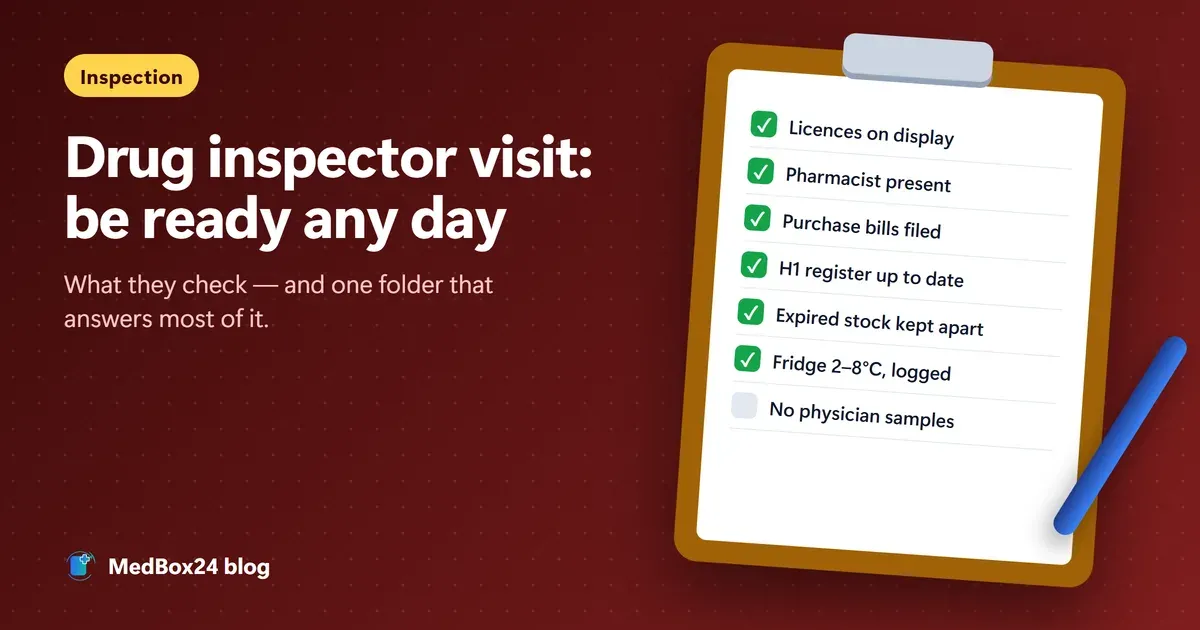
Once a year, take out your licence and check every name and detail on it against reality: the address, the owner, the pharmacist. If anything has changed, report it then — not on the day an inspector reads it out to you. Our drug inspector checklist covers what else to check at the same time.
Run your medical store on MedBox24
Billing, stock, expiry, GST and payroll — on phone and computer. Free trial, no card.
Start free trial