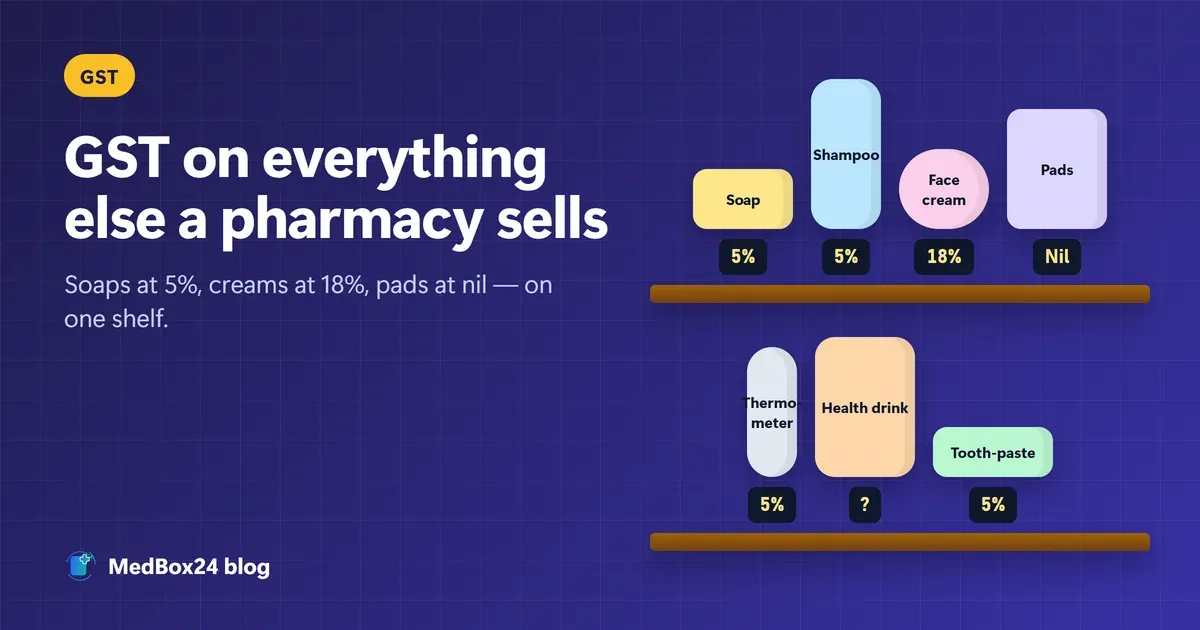
Walk into any medical store and count the shelves. Medicines are most of the sales, but next to them sit soaps, shampoos, face creams, baby products, sanitary pads, thermometers, BP machines, protein powders and glucose. Each of these has its own GST rate, and since 22 September 2025 many of them have changed.
A wrong rate on a ₹40 soap does not feel like much. On a few hundred bills a month, in your GST return, it does. Here is how to keep the rest of the store right.
The rates most stores will see
Product | GST now | Note |
|---|---|---|
Soap, toothpaste, shampoo, hair oil, talcum powder | 5% | Down from 18% |
Toothbrush, tooth powder, shaving cream | 5% | Down from 12–18% |
Face creams, make-up, perfumes, hair dye | usually 18% | Not all cosmetics were cut |
Sanitary napkins | Nil | Exempt |
Thermometers, glucometers, test strips, many diagnostic kits | mostly 5% | Check the supplier's bill |
Health drinks, protein powders, nutrition supplements | varies | Depends on the product and HSN |
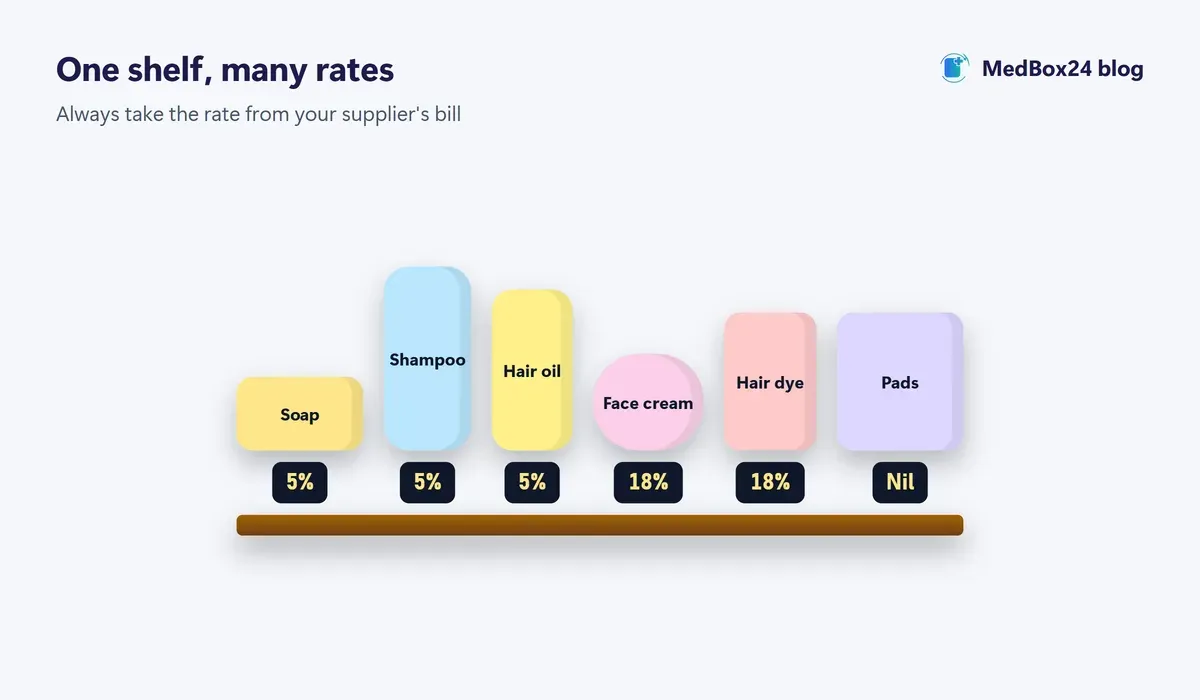
The safe rule does not change: the rate is on your supplier's bill. The supplier has the HSN code and charges you the rate for that code. Use the same rate when you sell.
Why stores get these wrong
Products were set up years ago. When the store started, someone typed 18% for "cosmetics" and never looked again. After GST 2.0, half of those are now 5%.
One category, many rates. "Personal care" mixes soaps at 5% with face creams at 18%. Setting the rate per category instead of per product puts one of them wrong.
New products copy old ones. A new shampoo gets added by copying an old cream's details, rate included.
Getting it right once
List every non-medicine product in your billing software with its GST rate and HSN code.
Check each against the last purchase bill for that product.
Fix the product, not the bill. If the rate is set right on the product, every future bill is right.
Add the HSN code. Your GST return needs an HSN summary; products without one cause trouble every month. The code is printed on your supplier's bill, next to each line.
A note on health supplements
Protein powders, health drinks, baby food and nutritional supplements are food under the law, not medicine. Besides the GST question, selling them may need an FSSAI registration for your store. We cover that separately when we look at FSSAI for medical stores.
Do these shelves pay?
Usually, yes. Personal care and daily needs carry their own margins, sell to customers who came in for something else, and do not depend on a doctor's prescription. In our post on growing sales without a discount war, the open shelf is one of the ten ideas for a reason.
Just make sure the rate on each of them is as right as the rate on your medicines. It is the same GST return.
Run your medical store on MedBox24
Billing, stock, expiry, GST and payroll — on phone and computer. Free trial, no card.
Start free trial