Every medical store has a drawer, a box or a back shelf where expired strips end up. Most owners do not know what is in it. Add it up once — MRP of everything inside — and it is usually a shock.
Expiry is not bad luck. It is stock that nobody looked at in time. Here are seven ways to deal with medicines that still have a few months left, starting with the one that makes the rest possible.
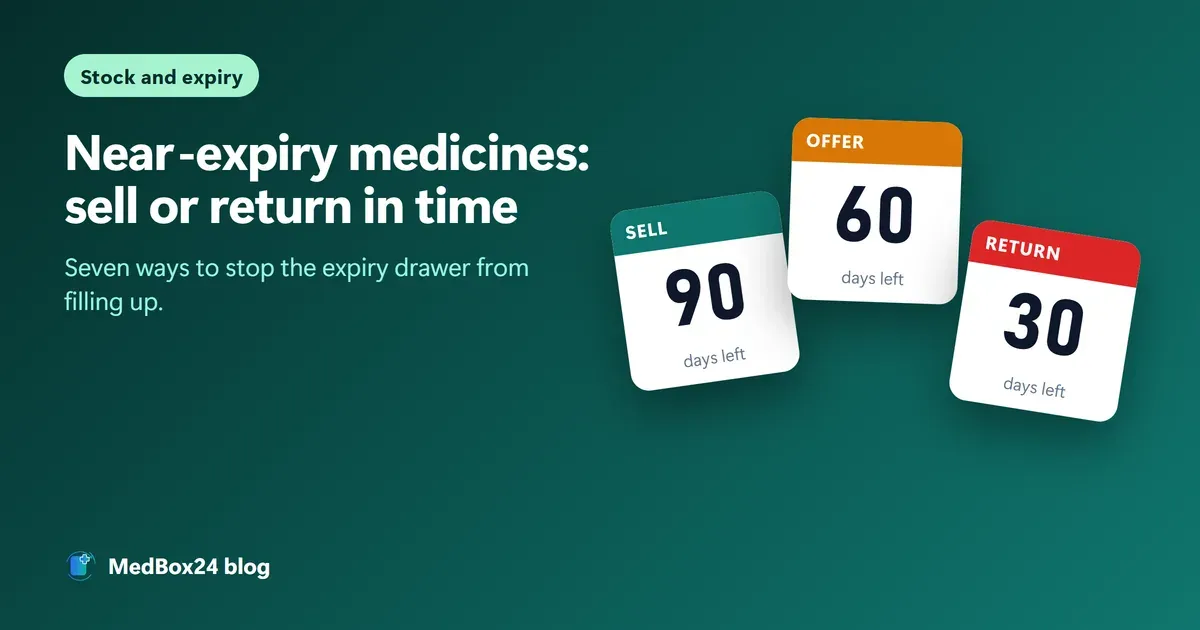
1. See it 90 days ahead, not on the day
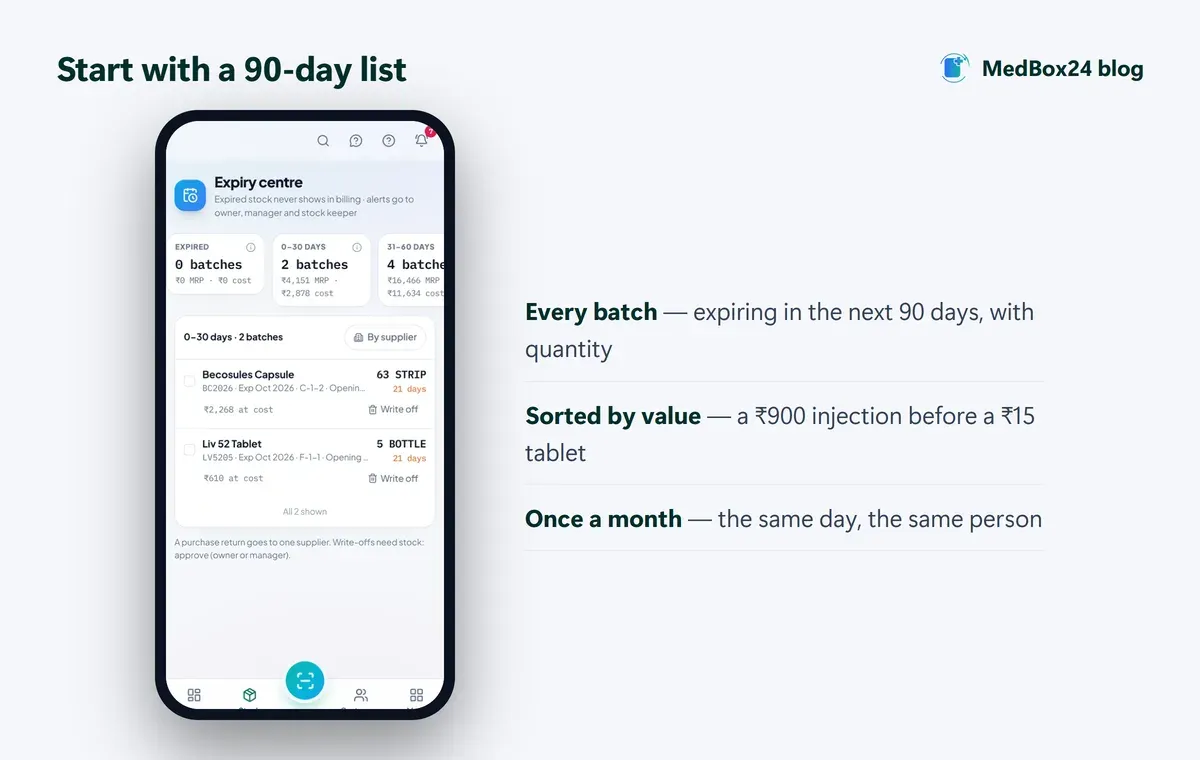
You cannot act on what you do not see. Once a month, list every batch that expires in the next 90 days, with its quantity and value. Sort it by value, because ten strips of a ₹900 injection matter more than fifty of a ₹15 tablet.
90 days is enough time to sell most things, and to return what will not sell. 30 days is often too late for both.
2. Put the earliest expiry in front
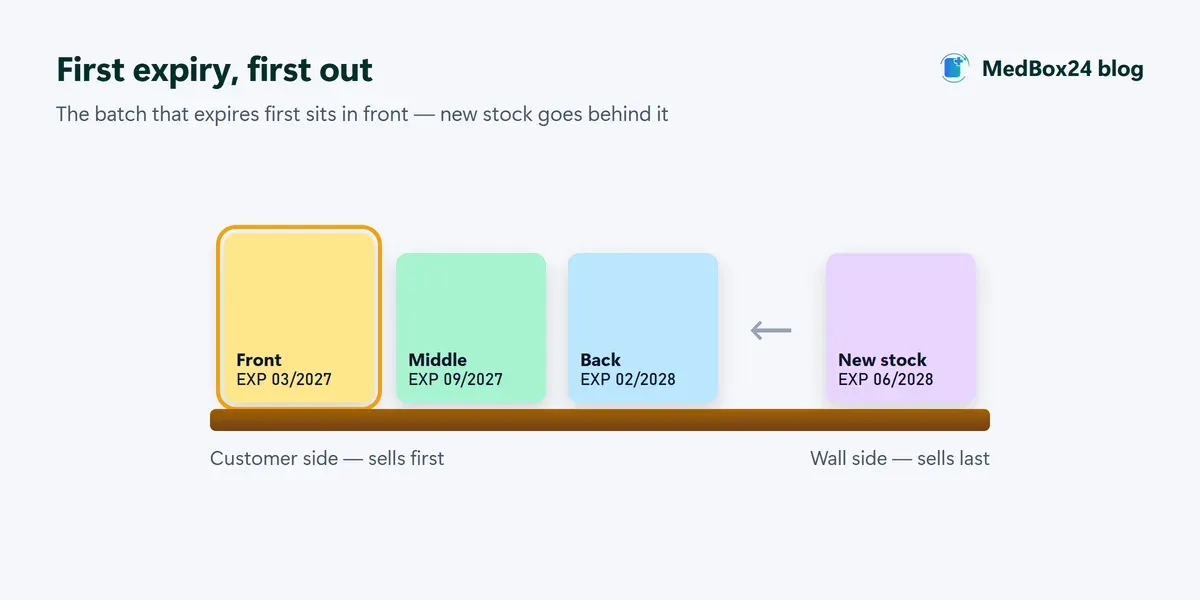
First expiry, first out. When new stock arrives, it goes behind the old batch, not in front of it. It sounds obvious; on a busy day it is the first thing that slips. A helper who puts the new box in front because it is easier creates next year's expiry today.
3. Offer it to the patient whose course fits
A strip that expires in two months is fine for a five-day antibiotic course. It is not fine for a patient who will take one tablet a day for ninety days. The rule is simple and honest: the medicine must last until the last dose.
For regular patients on monthly medicines, the opposite works: give them the batch with the longest life, and use the near-expiry batch for short courses and walk-in customers.
4. Tell the clinics that write it
If a medicine is moving slowly because one doctor stopped writing it, the clinic two doors down may still use it. Many chemists simply tell nearby doctors, "I have stock of this brand." It is not a discount scheme, just information, and it often moves stock that would otherwise sit.
5. Return it to the distributor — before the cut-off
Most distributors take back expired or near-expiry stock against a credit note, but only on their terms: within a set window, only for goods bought from them, sometimes with a deduction. Know the terms of each of your distributors, and send the return list before the window closes, not after.
Keep the return note and the credit note together. A credit note that never arrives is the same as throwing the strips away. Our expiry return calculator shows what you should get back for a return, and our guide on managing medicine expiry covers the monthly routine.
6. Move it to where it sells
If you have two stores, or a friendly chemist nearby who sells more of a product, moving stock between stores is often better than returning it. A strip that sits in one store for four months may sell in a week in the other.
7. Buy so that it happens less
The real fix happens at the purchase counter, not the expiry drawer:
Check the expiry when stock arrives. For slow products, do not accept batches with only a few months left.
Buy slow products in small quantities, even if the scheme is better on bigger packs. A free strip that expires is not free.
Look at what expired last year. The same 20 products usually appear again. Buy those carefully.
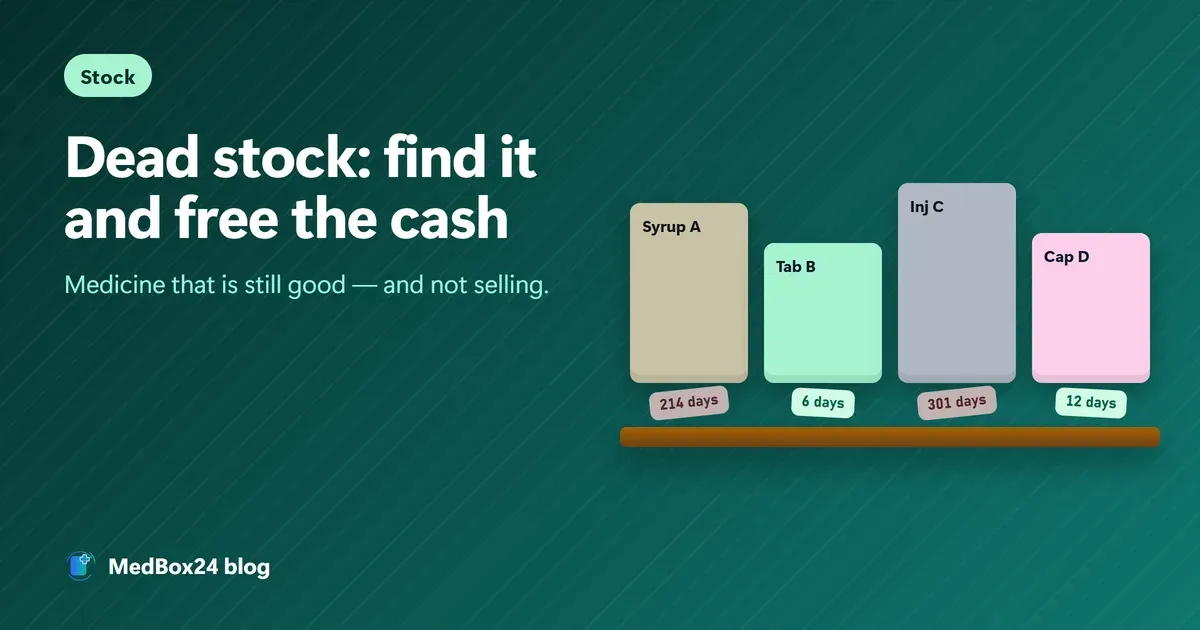
Our post on dead stock goes further into the slow movers that turn into expiry.
What not to do
Do not sell medicines after their expiry date, do not change or cover expiry dates, and do not mix expired strips back into stock. Expired medicines go into a separate, marked box until they are returned or disposed of properly. That box is the first thing an inspector asks to see — make sure it is one you can show.
A store that checks its 90-day list every month and returns on time can usually keep expiry losses under 1% of sales. A store that waits for the drawer to fill up rarely does. The difference is one hour a month.
Run your medical store on MedBox24
Billing, stock, expiry, GST and payroll — on phone and computer. Free trial, no card.
Start free trial