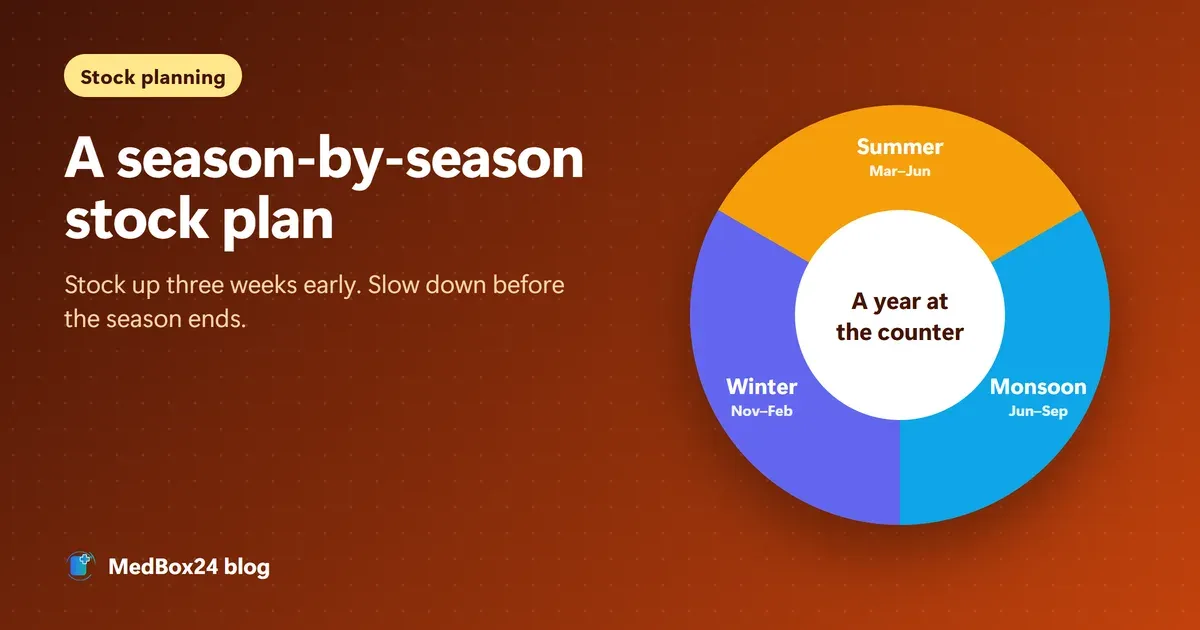
Every chemist knows the monsoon brings fevers and the winter brings coughs. What separates a store that does well in each season from one that runs short — or ends up with cartons of cough syrup in April — is timing: stocking up two to three weeks before the rush, and slowing down before it ends.
Here is a season-by-season plan for a typical store in India. Adjust it to your region: the monsoon in Kerala and the winter in Punjab do not arrive on the same day.
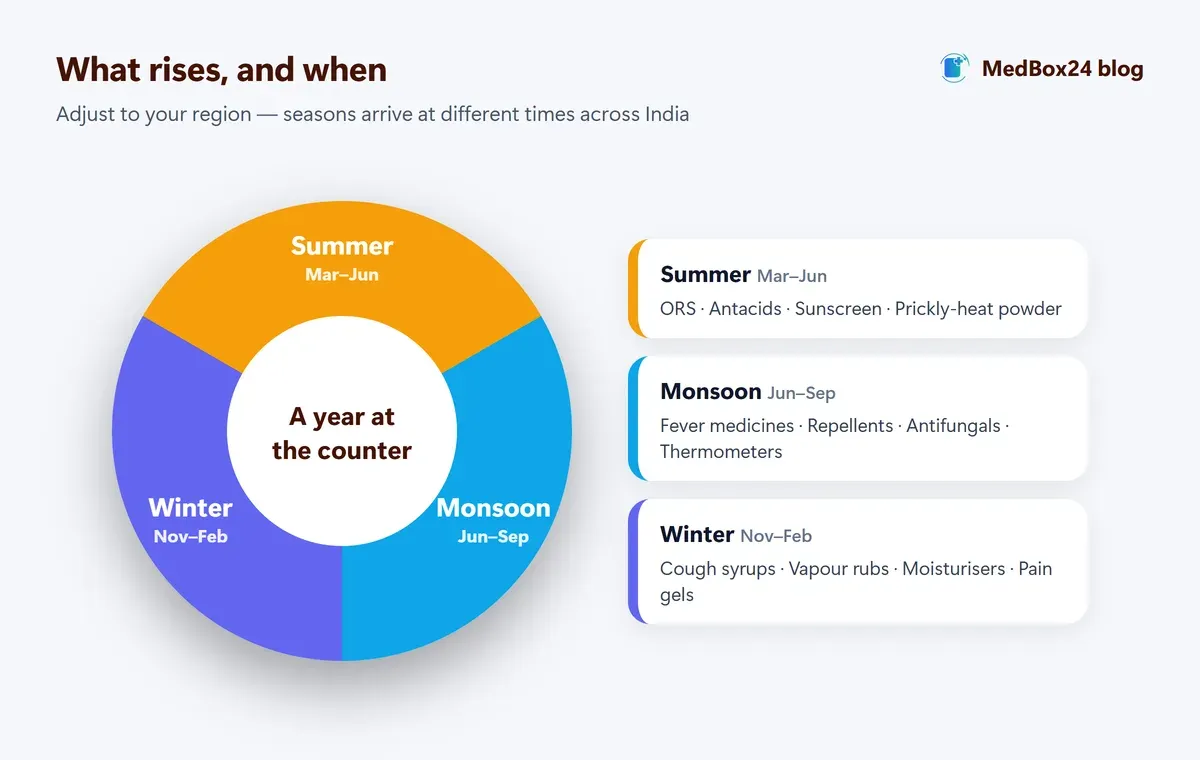
Summer (March to June)
Heat, dehydration, stomach infections, skin problems.
ORS and electrolyte drinks — the biggest mover. Keep several brands and flavours.
Anti-diarrhoeals, antacids and probiotics.
Sunscreen, prickly-heat powder, antifungal creams and powders.
Glucose powder and summer drinks on the open shelf.
Eye drops for dust and dryness.
Start building ORS stock in late February. By the first heatwave, distributors are often short.
Monsoon (June to September)
Fevers, mosquitoes, wet feet, infections.
Paracetamol and fever medicines — the busiest weeks of the year for many stores.
Mosquito repellents — creams, coils, liquid refills, patches for children.
Antifungal creams and powders.
ORS again, for stomach infections.
Thermometers — a monsoon fever is when many families finally buy one.
The monsoon is also when damp ruins stock. Keep cartons off the floor, away from walls that leak, and check that strips are not sticking or labels peeling.
Winter (November to February)
Coughs, colds, dry skin, joint pain.
Cough syrups, lozenges, decongestants, vapour rubs and steam inhalers.
Anti-allergy tablets.
Moisturisers, lip balm, petroleum jelly, cold cream.
Pain relief gels and balms for joints.
Vitamin supplements, often asked for by older customers.
Cough syrups are the classic winter overstock. They sell fast for ten weeks and then almost stop. Order in smaller lots more often through the season rather than one big order in November.
Festivals and weddings
Around big festivals — Diwali, Eid, Durga Puja, Christmas, the wedding season — antacids, digestive tablets and painkillers move faster, and so do gift-able items on the open shelf. Keep them in stock, not in bulk.
Do not overstock the season
The mistake is not running short in the first week; it is having too much in the last. Two habits help:
Use last year's sales, not memory. Look at what you actually sold of each seasonal product, week by week, last year. That is your plan.
Raise reorder levels at the start, lower them before the end. The formula in reorder level for medicines works for seasonal products too — just recalculate the daily sale every few weeks.
A season that ends with a near-empty seasonal shelf is a season done right. Whatever is left should go back to the distributor while the expiry still allows it — see selling or returning near-expiry stock.
Run your medical store on MedBox24
Billing, stock, expiry, GST and payroll — on phone and computer. Free trial, no card.
Start free trial